 As the statewide coalition representing domestic violence (DV) programs and survivors, we support advocates who help survivors rebuild safety and autonomy. An important component of our work is preventing teen dating violence (TDV) by teaching young people about consent, respect, and healthy relationships. As we begin a new year and prepare for our annual Teen Summit in February, we reassert our support of the trans community by standing in opposition to SB 120/AB 103, which would eliminate the right for trans students to use the name and pronouns they identify with in our schools. Reducing vulnerability to TDV requires expanding autonomy, belonging, and respect. For these reasons, we strongly oppose Senate Bill 120 and Assembly Bill 103.
Here, we offer a reflection on why our work must include supporting trans youth, trans survivors, and the broader trans community as an essential aspect of our work against the root causes of DV.
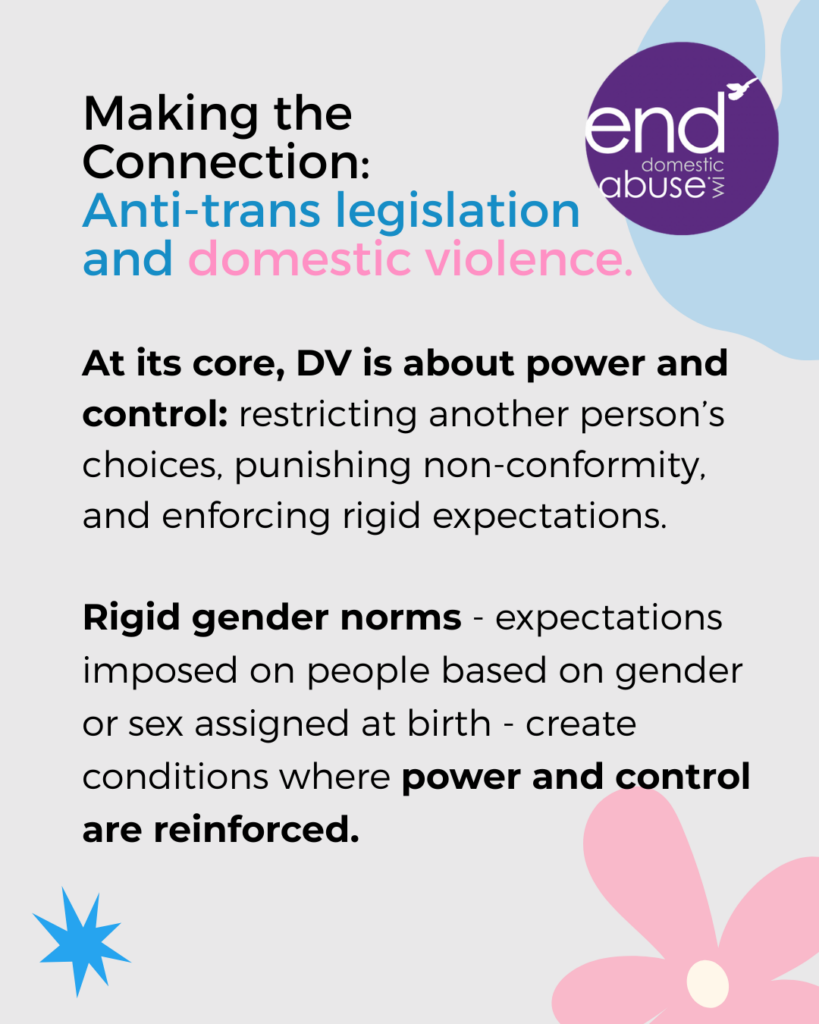
DV is a complex issue with many contributing factors. While this bill may not appear directly related to DV, the bill’s content is rooted in societal norms that contribute to both DV and violence against youth. Rigid gender norms – expectations imposed on people based on gender or sex assigned at birth – create conditions where power and control are reinforced.
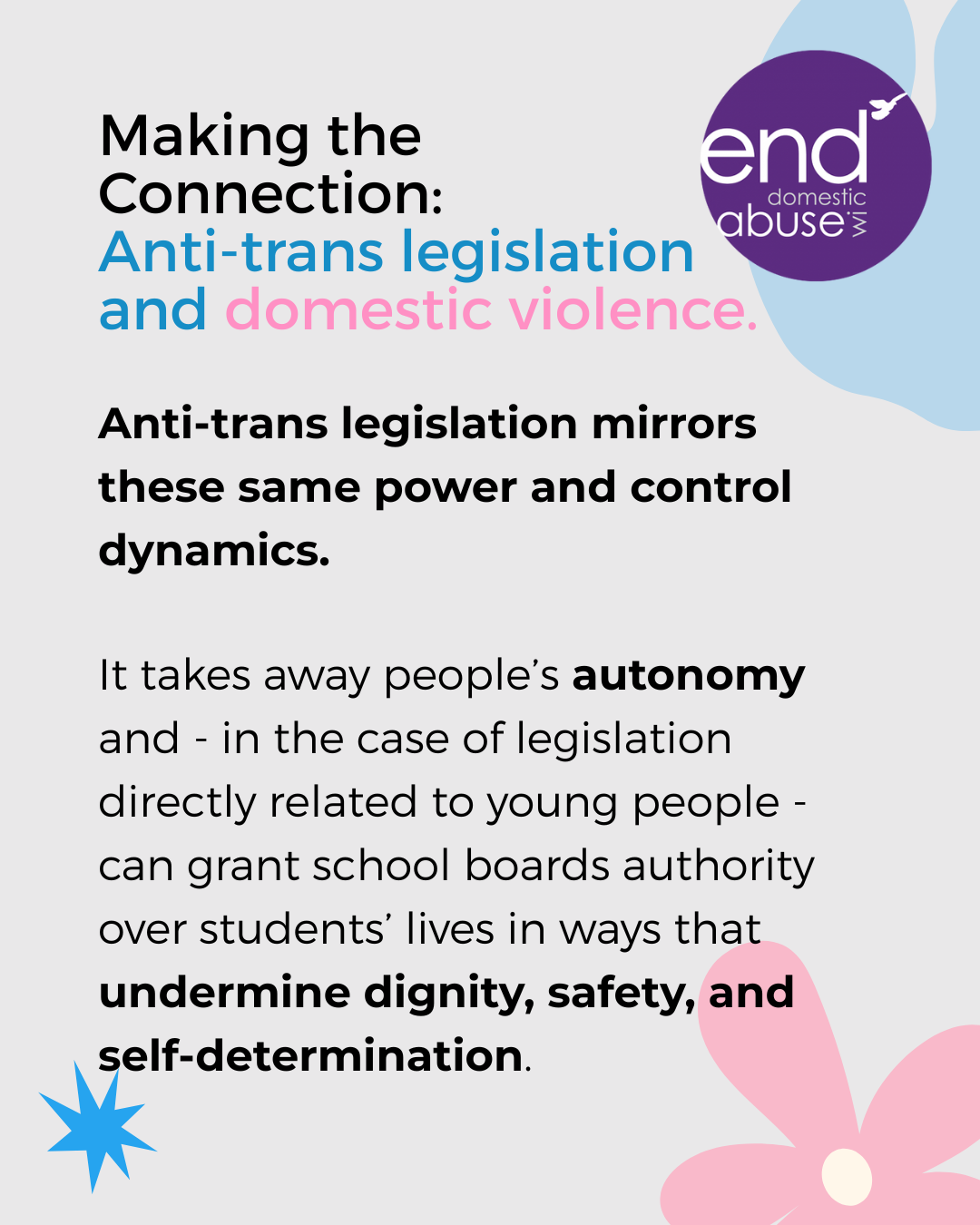
At its core, DV is about power and control: restricting another person’s choices, punishing non-conformity, and enforcing rigid expectations. Senate Bill 120 and Assembly Bill 103 mirror these same dynamics in the school. They take away young people’s autonomy and grant school boards authority over students’ lives in ways that undermine dignity, safety, and self-determination.
 Transgender youth already face staggering rates of rejection and violence. Not all young people are safe being open about their gender identity at home, and transgender youth face elevated risks of rejection and abuse from caregivers. For some youth, school is the only place here they can exist openly in their gender identity and expression without risking their physical or emotional safety. A 2023 study of Wisconsin youth found that transgender students reported two to three times the rates of depression, self-harm, suicidal thoughts, and suicide attempts compared to their peers, resulting from the heightened exposure they face to rejection, identity erasure, bullying, and violence.
When we send a message that some children are less deserving of respect, we contribute to a culture that perpetuates harm. Young people who experience discrimination or rejection often seek validation elsewhere, including from peers or dating partners, which can increase vulnerability to unhealthy or abusive relationships.
Individuals who abuse their dating partner frequently exploit existing stigma to maintain control. For transgender youth, this can include dating partners weaponizing homophobic or transphobic stigma, discrimination, and lack of understanding to isolate and control them. Research shows that approximately half of transgender youth report being sexually assaulted by someone they were dating. Laws like SB 120 and AB 103 risk deepening isolation. Isolation is, alongside stigma, well-documented as a risk factor for teen dating violence, as well as depression, anxiety, and suicidality.
 At End Abuse, our prevention programs teach that healthy relationships are built on mutual respect, autonomy, and trust. SB 120 undermines these lessons. It reinforces gender stereotypes that fuel abuse rather than prevent it. Creating inclusive and supportive educational environments cultivates empathy, respect, accountability, and an understanding that control and violence are never acceptable in a relationship.
In our unique role as the statewide coalition against domestic violence, we assert our support of the trans community and our commitment to addressing root causes of violence. In a new year, we understand and recommit to vocal advocacy in our vital public policy and education work, grounding always in our expertise and commitment to victims and survivors of DV.